
World Cup 2026: Why Mexico City May Be the Smartest Fan Destination
Choosing where to watch the World Cup 2026 may matter as much as choosing which matches to attend.
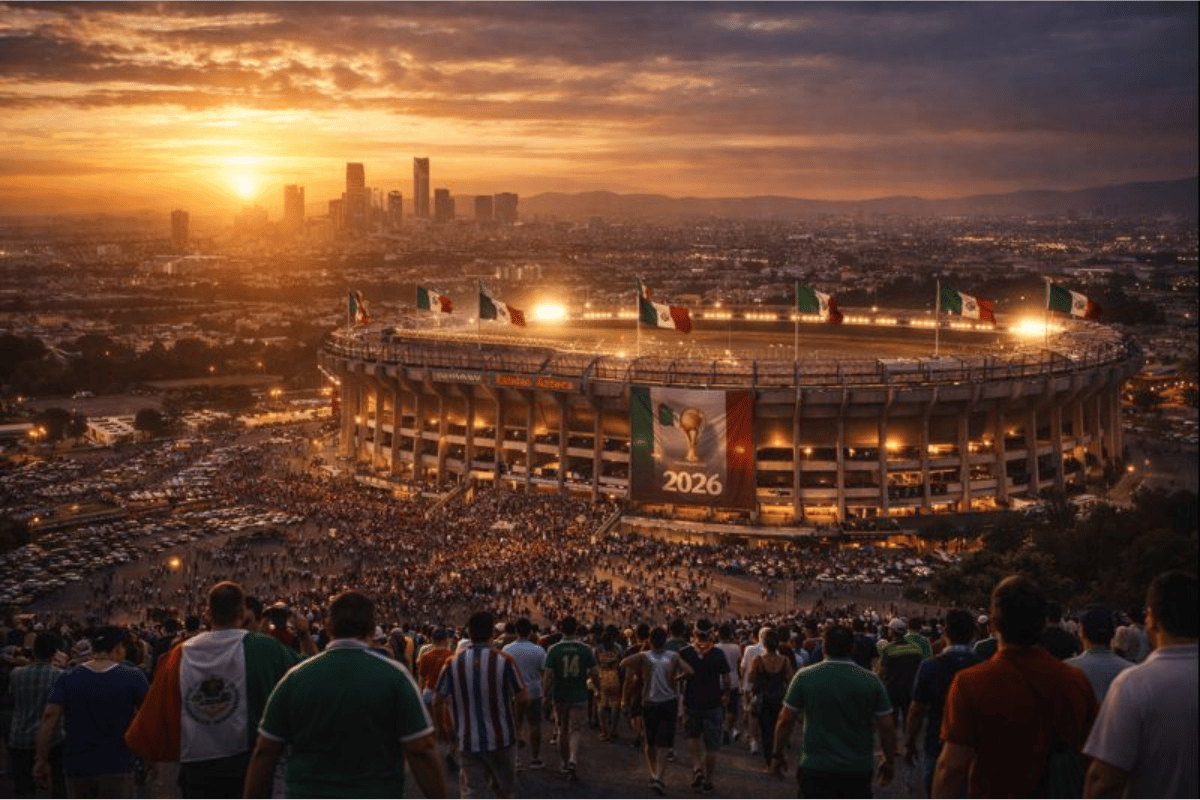
With games spread across three countries and 16 World Cup 2026 host cities, the fan experience will vary dramatically depending on location. Based on accessibility, cost, atmosphere, football culture, and overall value, Mexico City stands out as one of the strongest destinations for World Cup 2026 fans under current conditions.
A Football City With Unmatched World Cup Heritage
Mexico City is the only city in history to host two World Cup finals (1970 and 1986). Estadio Azteca is not just a stadium — it is a living monument to football history, forever linked to Pelé, Maradona, and some of the sport’s most iconic moments.
The stadium is scheduled to host Mexico City World Cup matches again in 2026, cementing its status as the most historically significant World Cup venue still in active use.
For fans seeking authenticity and tradition, few World Cup 2026 host cities can match Mexico City’s football pedigree.
Exceptional Value Compared to US World Cup Host Cities
While prices across many US World Cup host cities are already climbing, Mexico City continues to offer a clear cost advantage.
Based on current listings across major booking platforms, mid-range hotel prices in Mexico City are typically 40–60% lower than comparable options in cities such as Miami or Los Angeles, with similar gaps across food, transportation, and entertainment.
For fans attending multiple matches or traveling in groups, Mexico City offers one of the strongest cost-to-experience ratios of any World Cup 2026 host city.
An Atmosphere Few World Cup Cities Can Replicate
Mexico City delivers what many fans value most: continuous World Cup atmosphere.
While some US cities will host matches in suburban stadium settings, Mexico City’s dense urban environment allows football to spill into the streets — from public squares and official fan zones to bars, restaurants, and local neighborhoods.
The convergence of local supporters, South American fans, and traveling CONCACAF supporters is expected to create a festival-like environment throughout the group stage of World Cup 2026.
A Central Hub for World Cup 2026 Group-Stage Travel
Mexico City is expected to host multiple World Cup 2026 group-stage matches, making it well suited for fans planning extended stays.
Its major international airport and extensive domestic flight network also make it a practical hub for fans combining Mexico with US or Canadian host cities.
Fans should note, however, that re-entering the United States requires valid documentation and may involve border processing time — an important consideration when planning multi-country World Cup itineraries.
Culture Beyond the Matches
Between games, Mexico City offers one of the richest off-pitch experiences of any World Cup destination.
From the historic streets of Coyoacán to the food markets and nightlife of Roma Norte, the city rewards exploration. World-renowned cuisine, landmark museums, vibrant nightlife, and distinctive neighborhoods provide depth that few World Cup 2026 host cities can match.
For fans traveling with partners or families, Mexico City offers far more than football alone.
Who Should Choose Mexico City for World Cup 2026?
Mexico City is particularly well suited for:
Fans prioritizing atmosphere over luxury
Budget-conscious World Cup travelers
Football purists seeking World Cup tradition
Supporters planning to attend multiple World Cup 2026 matches
The Bottom Line
World Cup 2026 will be the largest and most geographically spread tournament in history. In that context, Mexico City offers one of the strongest combinations of value, atmosphere, and football heritage among all World Cup 2026 host cities.
While other destinations may deliver scale or glamour, Mexico City delivers what the World Cup is ultimately about: football lived, not just watched.